










 LinkedIn
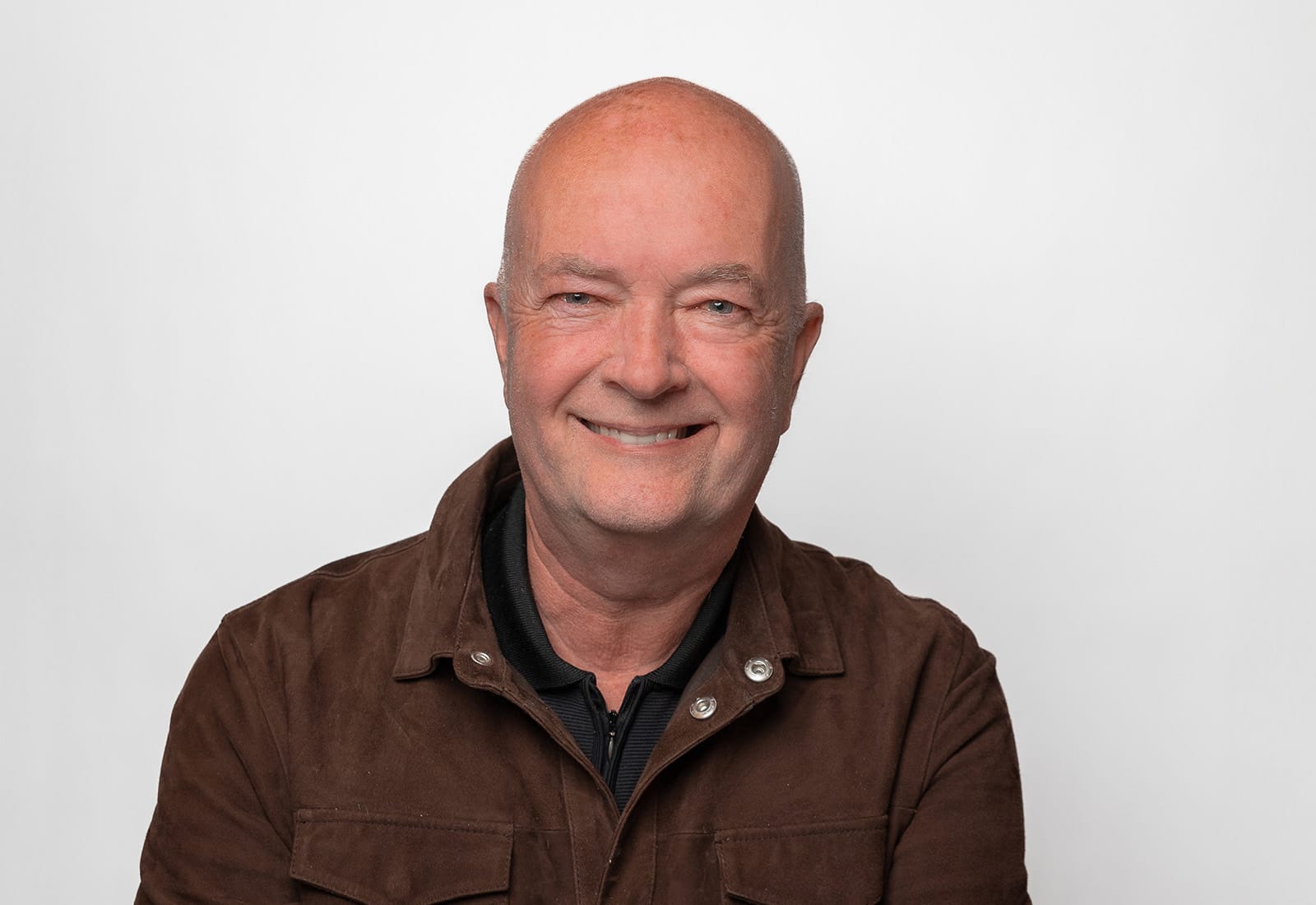
John Dalenoord
Medior Consultant
Volatile markets, geopolitical shifts, regulatory change and the cost of raising capital to grow: for most companies, these set the pace of growth from outside. Public funding is the one financing component you can plan for. It preserves your own capital, underpins investment and makes strategic projects less dependent on short-term conditions. More of your strategy stays on your own timeline.




















We realised 0.5 billion in public funding for our customers in 2025, and that capital sat outside the equity round, the debt facility and the state of the market.
Growth plans rest on factors the leadership team does not control. Capital gets repriced, regulation changes the calculation mid-project.
Geopolitics moves the things a business depends on, from demand through to the raw materials, components and supply chains that keep it running.
Rarely is the result that a project is dropped outright. More often it is scaled back, delayed or phased in stages until the advantage erodes.
Growth spending is cut first: R&D, expansion and decarbonisation. Not because the investment was wrong, but because it was the line item with no independent source of capital behind it.
It attaches to innovation, investment and transformation risk your company already carries.
It follows different logic from private capital or short-term budget cycles. Grants do not have to be repaid and cost no equity.
It is also set against multi-year programme budgets rather than quarterly sentiment, which is what makes it possible to plan around in the first place.
Used deliberately, it is the one source of growth capital that stays steady when the others move against you, which is why resilience is really a question of capital structure.
Companies that stay ahead of their market tend not to guess their way through changing funding programmes. They treat public capital as a normal part of the financial plan, mapped a few years ahead and matched deliberately to the roadmap.
That is what strategic resilience means here. Not a grant won opportunistically once a year, but a forecastable, non-dilutive layer in your capital structure that funds growth while reducing your exposure to the conditions you cannot control.
You keep developing, but the funds compete with day-to-day operations. Every delay pushes back market entry.
A tax-based instrument works most reliably here, because it runs independently of submission windows and budget pots.
Germany. The Forschungszulage recovers part of eligible R&D expenditure through tax: 25 percent of the eligible base, up to 35 percent for SMEs.
Netherlands. The WBSO reduces the payroll tax remitted for staff on research and development, so it takes effect monthly and also works without profit.
You are relocating production, building a second source or expanding a site to reduce dependency.
The investment is strategically right but pays back later. What decides it is that the application is in before the project starts.
Germany. GRW funding and suitable regional programmes apply where the site sits in an assisted area and regional economic effects arise.
A new requirement demands changes that initially only generate cost. The rebuild is not negotiable, and often neither is the timing.
Ongoing additional cost and one-off investment have to be separated. Each follows a different instrument.
Germany. Carbon contracts for difference cover the ongoing additional cost of low-carbon production. For investment, EEW, GRW or the EU Innovation Fund apply.
The EU Innovation Fund is available in both markets for technologies that substantially reduce greenhouse gas emissions.
The principle is straightforward. When you diversify the capital base, you make the strategy more resilient and protect the growth plan at the same time.
Resilience is built from real programmes, matched deliberately across three levels of funding. The representative set below covers both frontier innovation and growth-stage investment, so it fits large enterprises and scaling companies alike.
Horizon Europe and the EU Innovation Fund finance frontier research and first-of-a-kind deployment, the EIC Accelerator and EUREKA Eurostars support innovative SMEs and smaller companies, and IPCEI aligns cross-border industrial transitions.
In Germany, carbon contracts for difference underwrite the operating economics of decarbonisation, KfW facilities and GRW finance the capital investment, and the Forschungszulage returns value against R&D spend regardless of profit position. In the Netherlands, the WBSO returns R&D cost through payroll tax, and investment incentives such as EIA and MIA/Vamil apply to qualifying capital expenditure.
Provincial and regional programmes add investment and innovation support that stacks on top of the national and EU layers.
Matched correctly, these instruments turn a single volatile input into a diversified, predictable capital base that funds growth as well as protecting it.
Funding is specialist work, and the decisions that matter are made by people. Technology runs in the background.
Our consultants know the programmes, the evaluators and the sectors, and that judgement is the core of the work. The technology widens the search, keeps the evidence in order and takes over the repetitive administrative work, which leaves our specialists more time for the customer and for the careful reading of the funding landscape. It does not decide what is eligible or how a case is made. The human factor is the one that carries the result.
We go through your projects and separate what qualifies from what does not.
We plan across several years so the financing line becomes plannable.
We write against the evaluation criteria rather than the project description.
We keep documentation and evidence audit-proof throughout the funded period.
We also treat regulatory and market change as a source of opportunity. When a mandate, a transition scheme or an industrial-strategy budget moves, we identify the instruments it opens for you, so you can act while the opportunity is still open.
And we are candid about what fails. We record every outcome, the successes as well as the rejections and the audits, which means we can name the likely failure patterns and repeat what works before a submission rather than explain either afterwards.
The people behind your application
LinkedInMedior Consultant
 LinkedIn
Principal Consultant
 LinkedIn
Medior Consultant
 LinkedIn
Medior Consultant
 LinkedIn
Medior Consultant
 LinkedIn
Senior Consultant
 LinkedIn
Medior Consultant
 LinkedIn
Team Manager
 LinkedIn
Senior Consultant
 LinkedIn
Senior Consultant
 LinkedIn
Medior Consultant
 LinkedIn
Senior Consultant

Your competitors are already using public funding that you have earned just as much. The difference over time comes down to who plans for it and who leaves it on the table.
Built into the financing structure from the start, rather than chased once a year, public funding becomes a dependable way to finance the next stage of growth and to hold your course when the market does not.