








The people behind your application
MikeVerdaasdonk
Medior Consultant
Companies in Agri & Food, Horticulture & Starting Materials and the biobased economy face a distinctive set of demands. Emissions, water, soil and biodiversity sit alongside food security, and both require adjustments to plant and processes. Very different projects qualify: new foods, alternative proteins, sustainable packaging, precision agriculture, circular processes or biobased materials. Funding applies across the whole chain, from research and product development to investment in equipment and infrastructure.



















Four developments drive investment in this sector, across Europe alike.
Sustainable and resilient food systems. Emissions, water, soil and resource requirements meet food security and price stability, changing how food is produced and processed.
Protein and product transition. Alternative proteins and novel foods are moving from niche to mainstream, which needs real development and scale-up.
Biobased economy and circularity. Turning biomass, by-products and residual streams into materials, chemicals and energy, with dedicated schemes.
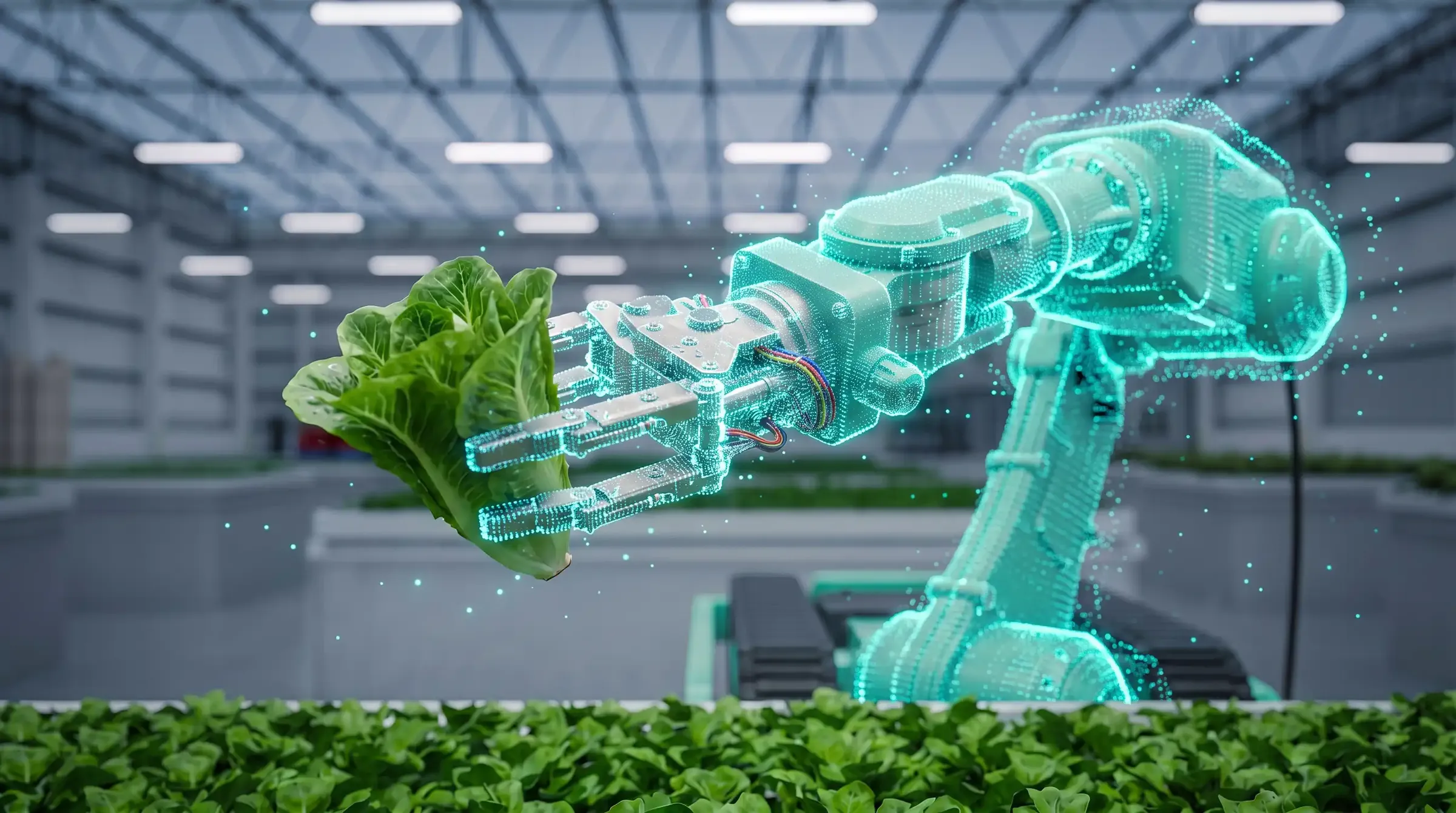
Precision and digitalisation. Sensors, data, robotics and AI are changing cultivation, processing and logistics, and must scale economically.
Energy efficiency & decarbonisation
From equipment replacement to process heat: programmes for lower energy use and CO₂ are currently especially well funded.
Automation & robotics
Investment in robotics, sensor technology and connected equipment that secures productivity without replacing people.
Digitalisation & Industry 4.0
From the digital twin to connected manufacturing: funding for modernising production IT.
In agriculture, food and the biobased economy, funding chances depend heavily on timing, evidence and the correct classification of the project. Three points are particularly critical.
Many schemes follow fixed application windows, closing dates or seasonal cultivation and production cycles. Checking investments, field trials, pilot production or conversions only after they have started can mean missing important windows.
Schemes in this sector often require hard figures on acreage, yields, raw material volumes, residual streams and water or energy consumption. In biobased and circular projects in particular, material flows have to be described and quantified plausibly.
A new food product, a processing method or a digital agricultural solution can contain both development and investment elements. If these are not separated cleanly, problems arise with costs, deadlines and evidence. Establish early, therefore, what is R&D, what is investment and which effect has to be demonstrated.
We do not start with the application but with the question of which parts of your projects qualify and which level they belong to. Our specialists know the schemes and the evaluation practice in this sector.
STEP 1
Review the roadmap.
We go through your plans and separate what qualifies from what does not.
STEP 2
Match the schemes.
We map the qualifying work to instruments at regional, national and European level.
STEP 3
Build the applications.
We write against the actual evaluation criteria rather than the project description.
STEP 4
Protect what is awarded.
We keep documentation audit-ready throughout the funded period.
The people behind your application
Medior Consultant
The people behind your application
Senior Consultant
The people behind your application
Principal Consultant
The people behind your application
Senior Consultant
The people behind your application
Medior Consultant

TSD Tooling & Precision
Tools that are accurate to within a thousandth of a millimetre: that calls for research, development and expensive prototypes. With the WBSO (the Dutch R&D tax credit) and Ignite Group’s technical knowledge, TSD…
Succesvolle implementatie financieringsstrategie gemeenten
Deze whitepaper biedt gemeenten een uitgebreide gids voor het ontwikkelen van een effectieve financieringsstrategie. Het document, gebaseerd op onderzoek en interviews met elf Nederlandse gemeenten, legt uit hoe…
Schuurman Schoenen
A family business with 650 employees, 49 stores and the conviction that the person behind the product is what counts. Together with Ignite Group, Schuurman Schoenen translated that vision into its own academy, more…


I only need to supply the necessary documents and Ignite Group takes care of the rest. It gives us the freedom to focus on developing our technology and selling our products.

Without the knowledge of ‘grant-speak’ and the speed of action, we would never have pulled this off.

Ignite Group critically reviewed our draft budget and clarified which costs were eligible. We followed that advice and secured a generous grant. It shows that, even after years of partnership, Ignite Group keeps adding value.
Already know what this is about? Switch to the matching objective.
Find out what your business has been entitled to all along.