








The people behind your application
Dr. TobiasThomaser
Consultant
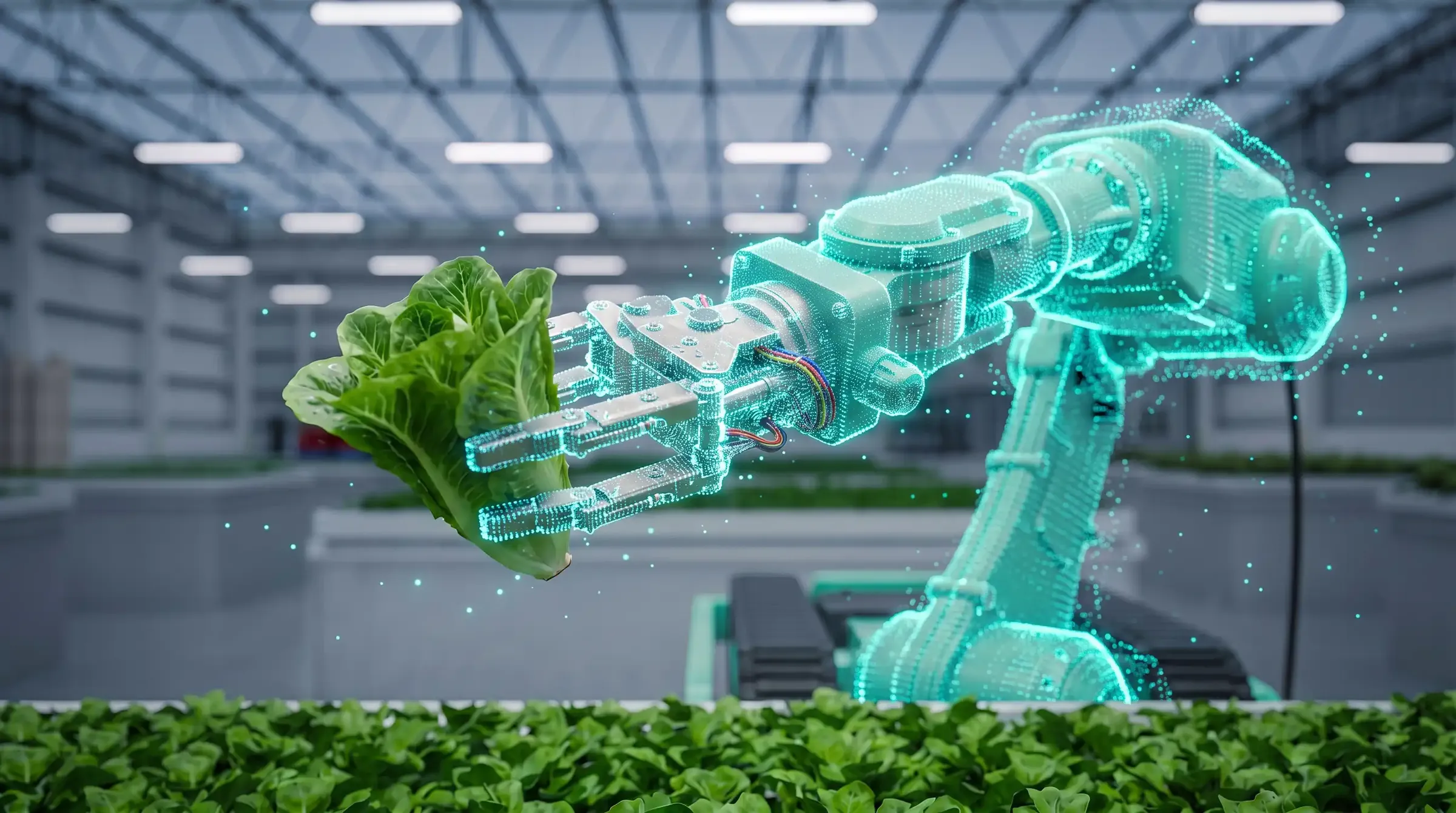
Companies in food, agriculture and the bioeconomy face a distinctive bundle of demands. Emissions, water, soil and biodiversity are in focus alongside security of supply, and both require changes to plant and processes. Many projects qualify: new foods, alternative proteins, sustainable packaging, precision agriculture, circular processes or more efficient equipment. Funding applies along the whole value chain, from research and product development to investment in equipment and infrastructure.










Four developments drive investment in this sector.
Sustainable food systems. Emissions, water, soil and resource requirements meet supply security, changing how food is produced and processed.
Protein transition. Alternative proteins and novel foods need real development and scale-up work.
Bioeconomy and circularity. Value from residual streams, replacing fossil raw materials, building circular processes.
Precision and digitalisation. Sensing, data, robotics and AI must scale and run economically in production.
Sustainable production processes
Converting production and processing methods to reduce emissions, water, energy and waste, where the outcome first has to be developed and demonstrated.
Alternative proteins and novel foods
Developing and scaling plant-based, fermentation-based and other novel foods, including the technical questions of taste, texture and production.
Bio-based materials and valorisation
Converting biomass, by-products and residues into materials, chemicals and energy, and the processes that make this viable at scale.
Precision and digital agriculture
Sensor technology, data platforms, robotics and precision methods that improve yield, resource use or resilience.
Food safety, quality and traceability
Digital systems, analytical methods or process innovations that improve quality, transparency, hygiene, shelf life or traceability along the value chain.
Plant and equipment
Investment in technology that enables the switch to resource-efficient production.
In food, agriculture and the bioeconomy, funding chances depend heavily on timing, evidence and the correct classification of the project. Three points are particularly critical.
Many programmes follow fixed application windows, cut-off dates or seasonal cultivation and production cycles. Checking investments, field trials, pilot production or conversions only after they have started can mean missing important funding windows.
Funding programmes in this sector frequently require robust figures on areas, yields, raw material volumes, residues, water or energy consumption. In bioeconomy and circular projects in particular, material flows have to be described and quantified plausibly.
A new food product, a processing method or a digital agricultural solution can contain both development and investment elements. If these are not separated cleanly, problems arise with costs, deadlines and evidence. It is therefore decisive to establish early what is R&D, what is investment and which effect has to be demonstrated.
We do not start with the application but with the question of which parts of your projects qualify at all and which level they belong to. Our specialists know the programmes and the evaluation practice in this sector.
STEP 1
Review the projects.
We go through your roadmap and separate qualifying from non-qualifying parts.
STEP 2
Match the programmes.
We map the qualifying parts to the appropriate instruments at regional, national and European level.
STEP 3
Build the applications.
We write against the actual evaluation criteria rather than the project description.
STEP 4
Protect what is awarded.
We keep documentation audit-ready throughout the funded period.
The people behind your application
Consultant
The people behind your application
Consultant
The people behind your application
Senior Manager
The people behind your application
Senior Consultant

The people behind your application
Consultant

Wegener Härtetechnik
Wegener Härtetechnik is a specialist heat treatment service provider and is developing an innovative hardening process for applications in the automotive industry.
5 Anzeichen, dass Sie Fördermittel beanspruchen können
KMU lassen jährlich Fördergelder ungenutzt liegen, weil sie ihren Anspruch unterschätzen — fünf Indikatoren zeigen, ob auch Ihr Unternehmen von Zuschüssen profitiert.
SaJo Consulting
SaJo Consulting GmbH develops tailor-made software solutions for demanding business requirements. To enable companies to use artificial intelligence securely, the company planned to develop an AI platform of its own.


Working with Ignite Group took a great deal of pressure off us. Thanks to […] their expertise, we always felt confident that our funding application was in the best hands.
If you have big ideas but don’t want to invest blindly: Phase 1 is your reality check – with funding instead of your own risk.
Working with Ignite was structured and reliable throughout. The holistic approach was particularly helpful […]. We are very satisfied with the result and are happy to keep working with Ignite.
Already know what this is about? Switch to the matching objective.
Find out what your business has been entitled to all along.